
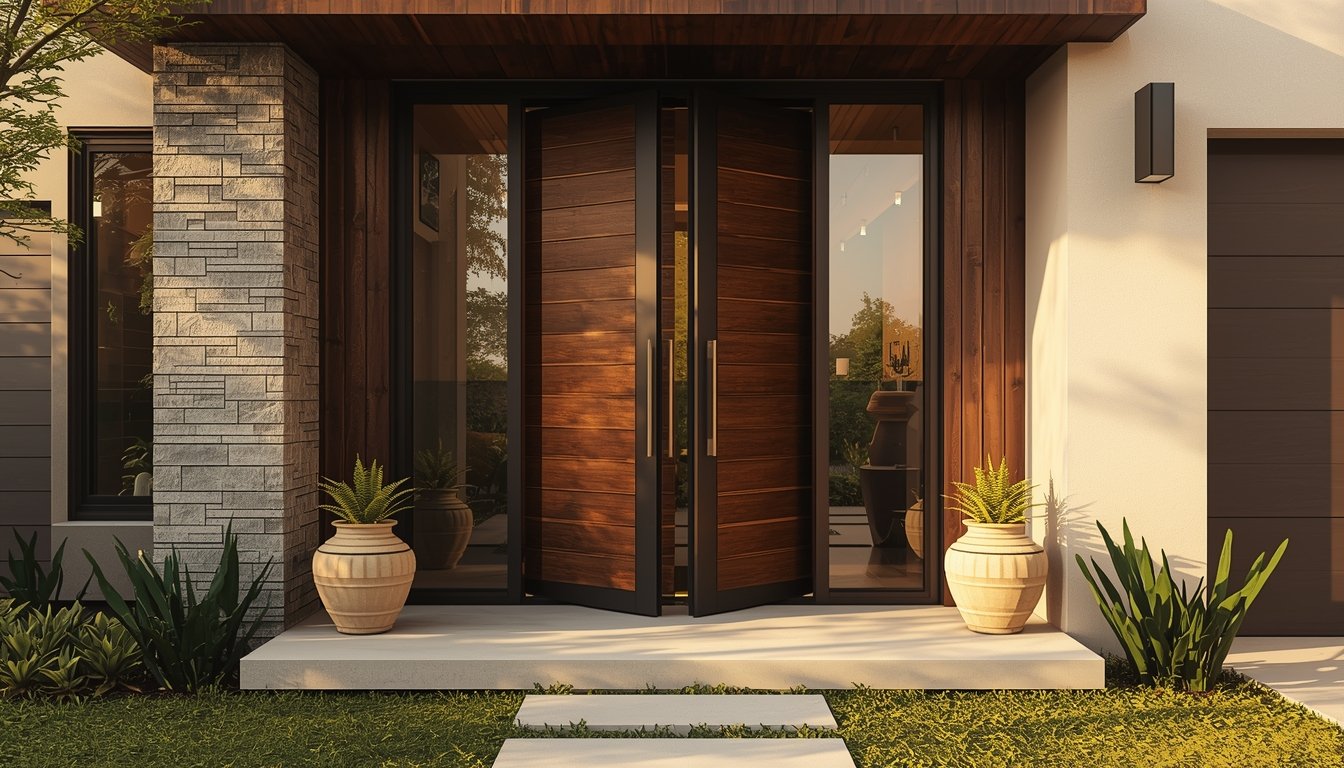
When designing a home, the entrance makes a statement before anyone even steps inside. If you’ve been wondering what is a pivot door, you’re not alone. Pivot doors have become a hallmark of modern architecture, offering a sleek, elegant alternative to traditional hinged doors. In this guide, we’ll break down everything you need to know about pivot doors—from their design and mechanics to the types and homes best suited for them.
A pivot door is a type of door that rotates on a set of pivot hinges, rather than the standard side-mounted hinges seen in traditional doors. Unlike regular hinged doors that swing from one side, a pivot door pivots from a central or offset point at the top and bottom of the door. This design allows for larger, heavier doors to be installed, creating a dramatic entrance.
The pivot door meaning is straightforward—it’s a door that rotates on a pivot point instead of swinging on hinges. Its construction allows for clean lines and minimalistic aesthetics, making it a favorite in contemporary homes and luxury properties.
Pivot doors aren’t just about looks—they also provide a unique functionality that transforms the experience of entering and exiting a home. Their smooth, balanced motion feels almost theatrical, turning a simple doorway into a design statement.
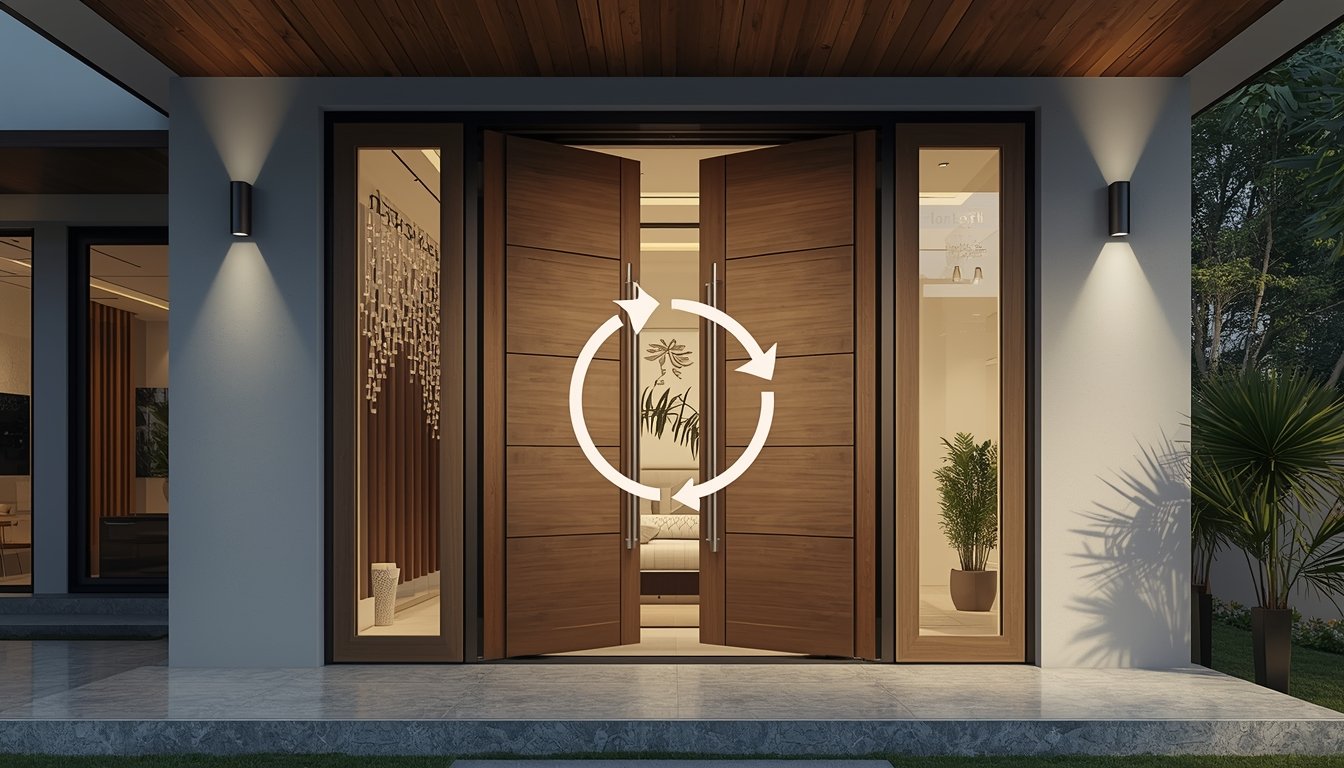
So, how does a pivot door work? The mechanism is surprisingly simple yet ingeniously effective. Instead of traditional side hinges, pivot doors use pivot pins installed at the top and bottom of the door. These pins are anchored into the door frame or floor and ceiling, allowing the door to rotate around a central axis.
This rotation creates several advantages:
• Flexibility in design – Pivot doors can be oversized, sometimes spanning several feet in width and height, without compromising stability.
• Smooth operation – Well-balanced pivot doors glide open and closed with minimal effort.
• Aesthetic freedom – Since the door doesn’t rely on visible side hinges, designers can achieve a clean, uninterrupted look.
Many luxury homes feature modern front door designs using pivot doors, as they combine form and function beautifully.
Pivot doors have earned the nickname luxury entry door due to their imposing presence and sophisticated design. Unlike conventional doors, pivot doors can be made from premium materials such as solid wood, steel, or glass, which adds to their grandeur.
Other reasons why pivot doors are considered luxurious include:
• Customizable dimensions – Perfect for creating a grand entrance.
• Minimalist aesthetic – Sleek lines enhance modern architecture.
• Enhanced durability – The pivot mechanism can support heavier doors that would be impractical with traditional hinges.
Installing a pivot door at the front of a home not only increases curb appeal but also signals a sense of elegance and modern sophistication.
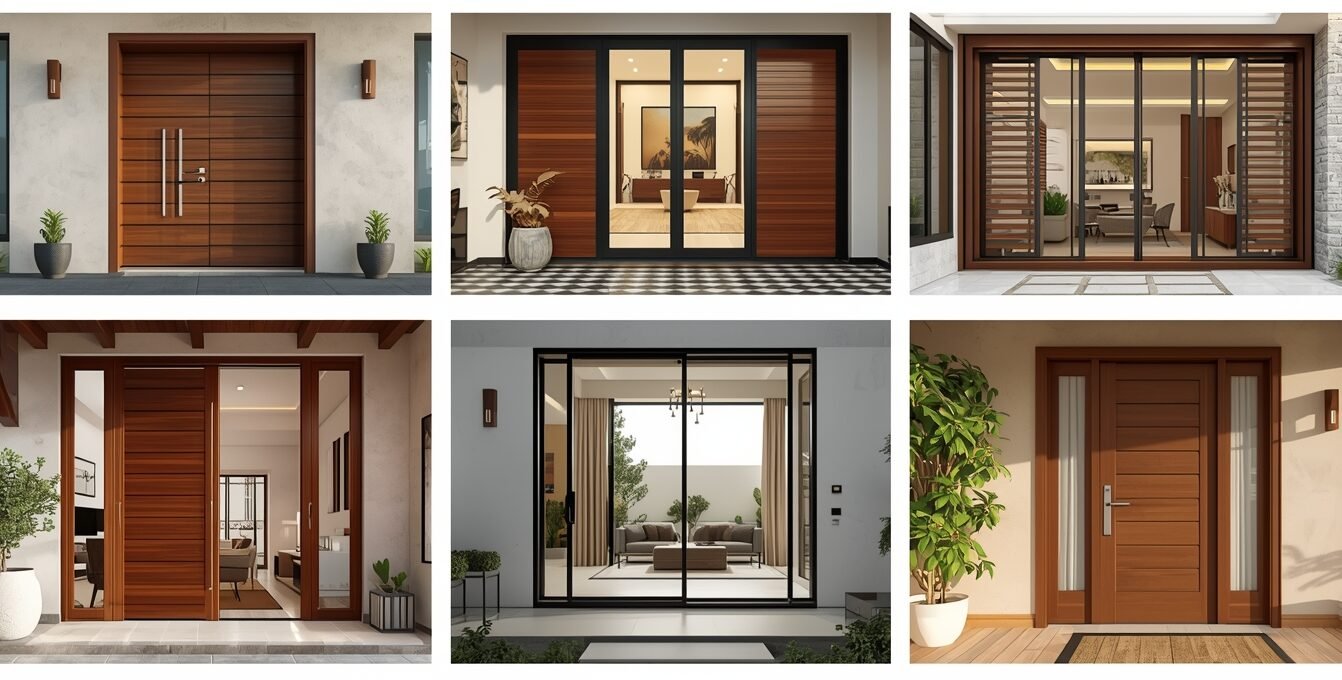
Pivot doors come in a variety of styles and finishes, catering to different design needs:
1. Single Pivot Doors – Rotate on a single pivot point, ideal for standard entryways.
2. Double Pivot Doors – Two panels pivot from central points, offering a grand, symmetrical look.
3. Offset Pivot Doors – The pivot point is set off-center, creating a dynamic, modern aesthetic.
4. Glass Pivot Doors – Made primarily from glass, these doors provide a sleek, contemporary look while allowing natural light to flow in.
5. Wooden Pivot Doors – Solid wood pivot doors bring warmth and timeless elegance to any entryway.
Whether you’re aiming for a dramatic pivot door for home or a subtle modern entry, there’s a style to fit every preference.
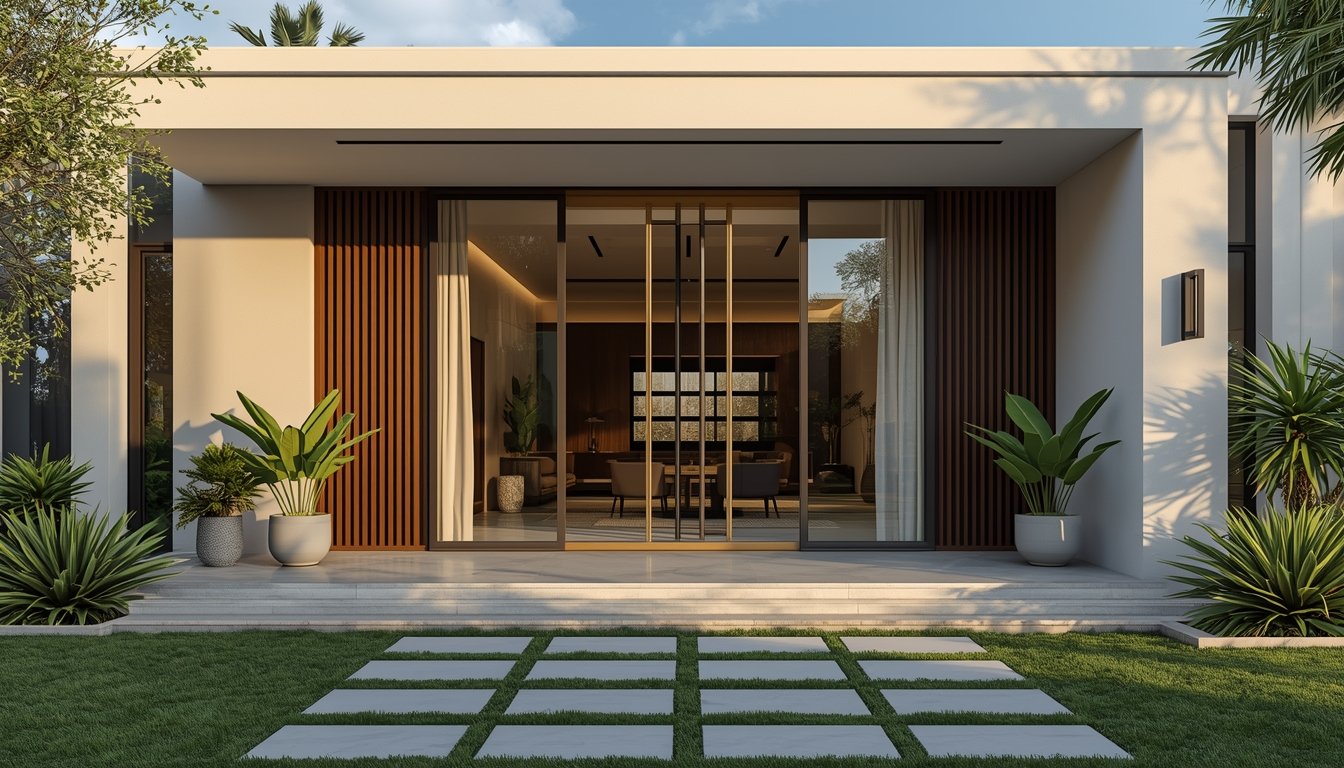
While pivot doors are versatile, they’re especially well-suited for certain home designs:
• Modern and contemporary homes – The clean lines complement minimalist architecture.
• Luxury properties – Oversized doors make a statement at the entrance.
• Homes with high ceilings – Tall pivot doors enhance grandeur and proportion.
• Renovated spaces – Homes with an open floor plan benefit from the seamless flow pivot doors provide.
Homes with traditional or cramped entrances may struggle to accommodate the size and swing of a pivot door. That said, with careful planning, almost any home can integrate one successfully.
Understanding the advantages and drawbacks of pivot doors compared to standard hinged doors helps homeowners make informed decisions:
• Supports oversized doors without visible hinges.
• Offers modern, luxurious aesthetics.
• Smooth pivot motion can feel more effortless.
• Can be fully customized in material, size, and design.
• Typically more expensive than hinged doors.
• Requires precise installation to ensure balance and alignment.
• May need specialized maintenance over time.
• Less traditional, which may not suit all home styles.
In a pivot door vs hinged door comparison, the pivot is clearly superior in terms of aesthetics and architectural impact, though standard hinges win for cost and simplicity.
Yes, if you’re looking for a bold, modern entryway. Pivot doors offer unique design flexibility and elegance that standard doors cannot match, especially for high-end or contemporary homes.
Absolutely. Modern pivot doors come with advanced locking systems and reinforced pivot mechanisms, making them just as secure as traditional doors.
Modern, luxury, and high-ceiling homes benefit the most. Pivot doors are ideal where the entrance is meant to make a statement.
Regular cleaning of the pivot mechanism, occasional lubrication, and inspection of the door alignment will ensure smooth operation for years.
Yes, pivot doors are not limited to exterior entrances. They can serve as interior partitions, room dividers, or stylish closet doors, enhancing the flow of modern interiors.