
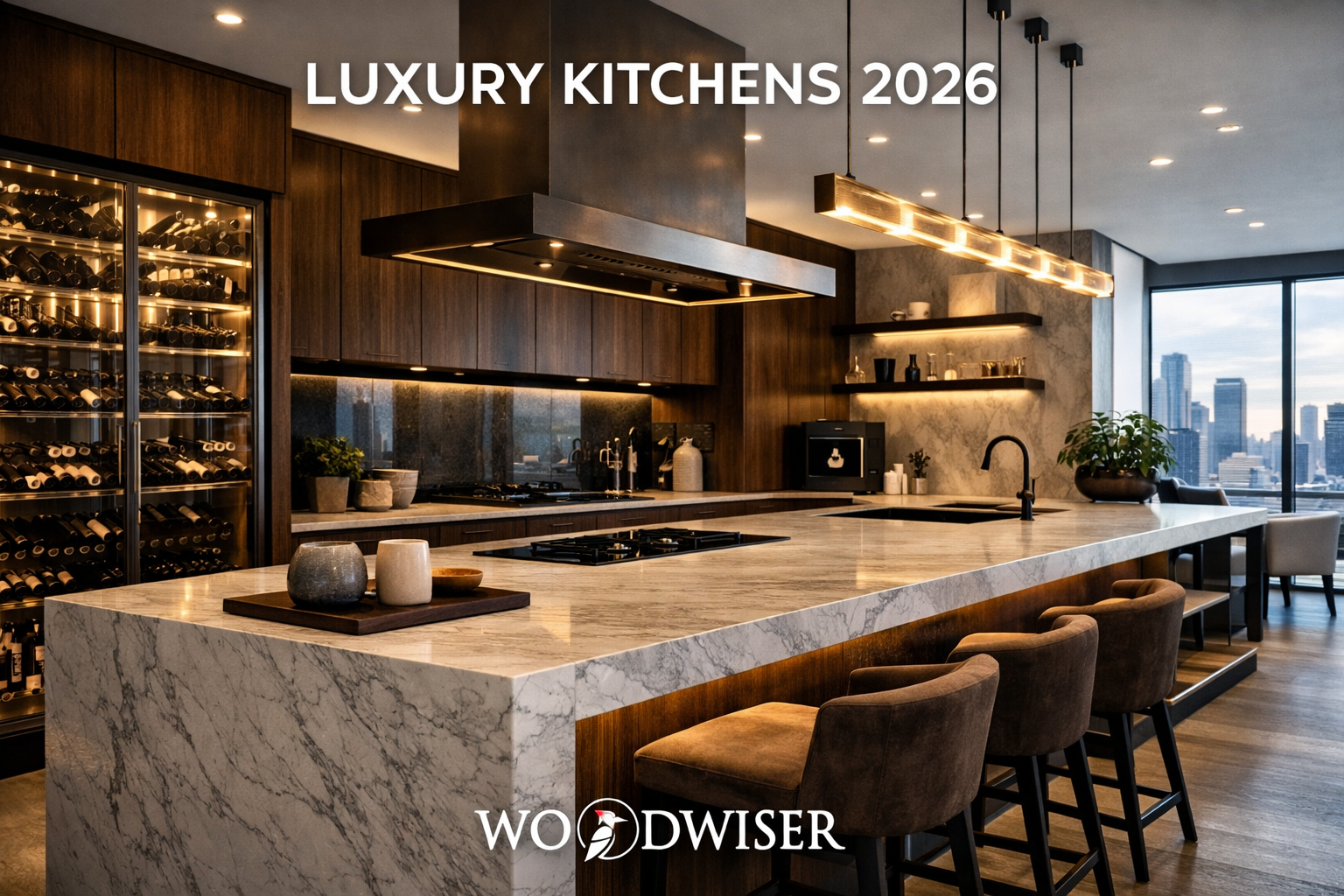
The idea of luxury has matured. Earlier, high-end kitchens were often defined by bold finishes and decorative elements. Today, luxury is quieter and more intentional.
Modern homes demand kitchens that connect seamlessly with living and dining spaces. This has shifted the focus toward better spatial planning, visual balance, and design decisions that do not overpower the rest of the interior. A well-designed luxury kitchen now feels like a natural extension of the home rather than a standalone feature.
This evolution is also changing buyer expectations. Homeowners are increasingly drawn to kitchens that promise long-term comfort instead of short-term visual impact.
When trends are discussed, they are often reduced to colours or finishes. However, luxury kitchen trends 2026 are more about how kitchens perform over time than how they appear at first glance.
One of the most noticeable shifts is toward simplicity. Kitchens are being designed with fewer visual interruptions, allowing materials and proportions to speak for themselves. Technology is still present, but it is integrated subtly so that it enhances function without dominating the space.
What makes these trends significant is their impact on daily use. Homeowners often realise the value of these design choices only after living in the kitchen – when movement feels easier and maintenance feels less demanding.
There is a growing preference for kitchens that feel calm rather than dramatic. Luxury modern kitchen designs in 2026 reflect this shift clearly.
Instead of sharp contrasts and heavy detailing, designers are opting for balanced colour palettes and refined finishes. These kitchens are designed to remain visually comfortable throughout the day, whether they are actively used or simply part of the living environment.
This approach resonates strongly with buyers. Kitchens that feel composed and well-proportioned tend to create a stronger emotional connection than those designed purely to impress.
In contemporary homes, kitchens rarely exist in isolation. Luxury interior design kitchen planning focuses on ensuring that the kitchen aligns with the overall interior language of the home.
Materials are often selected to echo elements used elsewhere, while lighting is planned to complement the home’s broader atmosphere. The goal is not repetition, but continuity. When this alignment is achieved, the kitchen feels intentional rather than added as an afterthought.
For buyers, this level of cohesion suggests careful planning and quality execution—two factors that strongly influence purchasing decisions.
Not all households use their kitchens in the same way, and this reality is shaping design choices in 2026. Bespoke kitchen interiors are becoming increasingly important because they prioritise how people actually live.
Instead of starting with cabinet styles, bespoke planning begins with understanding daily habits. Cooking frequency, storage preferences, and movement patterns all influence the final layout. This approach results in kitchens that feel personal rather than generic.
Over time, this personalization reduces friction in daily use. For homeowners, that comfort often becomes the most valued aspect of the kitchen—more than any single material or finish.
Modular kitchens have evolved significantly and are now a common feature in high-end homes. Luxury modular kitchen designs offer structure, precision, and adaptability without compromising on aesthetics.
One of their key strengths is flexibility. Modular systems allow for future updates or modifications without the need for a complete redesign. This is particularly appealing to homeowners planning long-term stays or considering future upgrades.
From a buying perspective, modular luxury kitchens offer reassurance. They combine refined design with practical benefits, making them a sensible investment rather than a purely stylistic choice.
Materials play a defining role in how a kitchen looks and feels over time. In 2026, luxury kitchens favour materials that balance durability with understated elegance.
Natural and engineered stone surfaces, high-quality wood finishes, and low-maintenance textures are widely preferred. These materials are chosen not just for their appearance, but for how they respond to daily use.
Buyers today are more informed and often consider longevity, maintenance, and repairability before making decisions. Kitchens that address these concerns naturally stand out in the luxury segment.
A luxury kitchen often reveals its quality through use rather than appearance. Thoughtful storage and layout planning can significantly improve daily comfort.
These elements may not attract attention in photographs, but they quickly influence how a kitchen feels to live with. For many buyers, this ease of use becomes a deciding factor.
In high-end homes, the kitchen often becomes the space that defines overall value. A thoughtfully designed kitchen signals care, foresight, and quality construction.
Luxury kitchens influence buying intent because they reduce uncertainty. Buyers feel confident knowing that the space will not require immediate changes and will continue to perform well over time. This sense of assurance often justifies higher investment decisions.
Luxury kitchens in 2026 are shaped by clarity, personalization, and long-term thinking. Rather than focusing on excess, modern luxury kitchens prioritise usability, material integrity, and seamless integration with the home.
For homeowners and buyers alike, investing in a well-designed kitchen is about choosing comfort and value that lasts. As expectations continue to evolve, luxury kitchens will remain central to modern homes – not as showpieces, but as spaces designed to support real life.
Most luxury kitchen trends in 2026 are focused on longevity rather than short-term appeal. Instead of bold finishes that date quickly, current trends prioritise neutral palettes, refined textures, and flexible layouts. These choices are easier to maintain and adapt, making them suitable for homeowners looking for kitchens that remain relevant over many years.
Luxury modern kitchen designs place greater emphasis on balance and restraint. Earlier styles often relied on heavy detailing or visual contrast, while modern designs focus on proportion, simplicity, and material quality. The result is a kitchen that feels calm and cohesive rather than attention-seeking, which aligns better with contemporary living spaces.
A bespoke kitchen interior is often worth the investment for homeowners who plan to use the space extensively or stay in the home long term. Custom planning allows the kitchen to be designed around individual habits, storage needs, and movement patterns. Over time, this personalisation reduces inconvenience and increases overall satisfaction, which many homeowners value more than visual upgrades alone.
When evaluating luxury modular kitchen designs, buyers should look beyond appearance. Key factors include the quality of materials, flexibility for future upgrades, and precision of installation. A well-designed modular kitchen should offer both visual refinement and the ability to adapt over time without requiring a complete renovation.
Luxury interior design kitchen planning can significantly influence home value by creating visual continuity and functional harmony. Kitchens that align well with the rest of the home often feel more intentional and premium. For buyers, this cohesion signals thoughtful investment and reduces the likelihood of costly changes after purchase.